
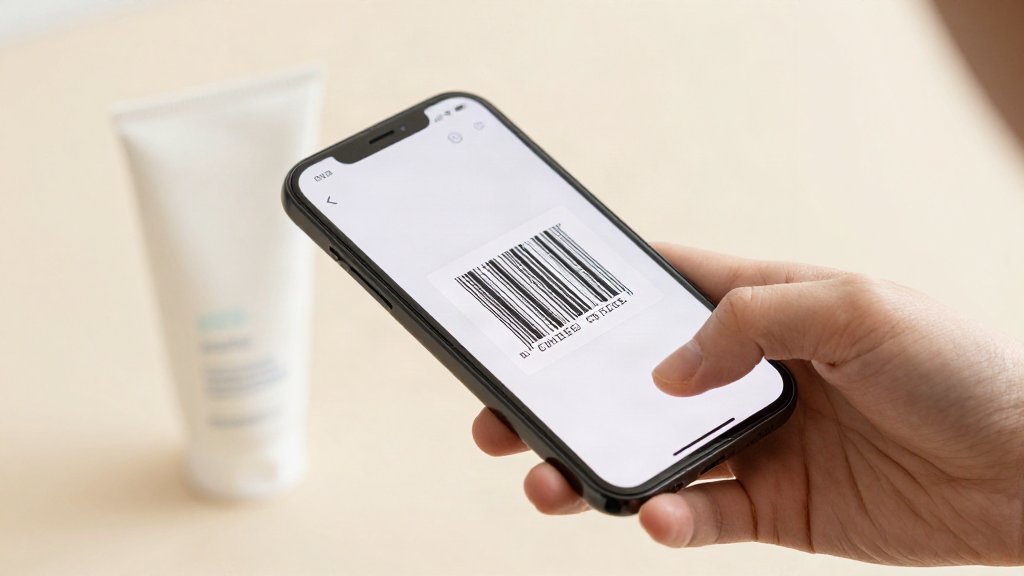
Checking what is actually inside a bottle of lotion, a bar of soap, or a household cleaner usually means squinting at a label printed in tiny type - then trying to remember which of the twenty hard-to-pronounce names on it are actually worth worrying about. The barcode on the back of that same bottle is a faster path. A barcode scanner that checks ingredient safety turns those digits into a plain-language safety read in seconds, with no lab test and no chemistry degree required.
Why reading the ingredient list by hand misses things
Reading the label yourself is a good instinct, and it is still worth doing. But it has three blind spots that trip up careful people all the time.
- Order is not the same as risk. Ingredient lists are ordered by concentration, not by hazard. A risky preservative used at a fraction of a percent can sit near the bottom, while a harmless filler appears first.
- Names hide families. The same substance can appear under several chemical names, so two products that look different on paper can share the same underlying concern.
- Interactions do not appear on the label. A label describes one product in isolation. It says nothing about how its ingredients behave together, or how they may behave on sensitive skin or alongside something else you already use.
That last point is where manual reading runs out of road. Safety is not only about single ingredients - it is often about how they combine.
How to scan a product barcode and read the safety analysis
The process takes about as long as unlocking your phone. Here is the full sequence, and what to look for at each step.
Step 1: Open the barcode scanner
Open the scanner in your browser and point it at the barcode on the product. There is nothing to install and no cost to start - scanning products is part of the free tier, and you do not need a credit card to begin.
Step 2: Scan the barcode
Hold steady over the barcode for a second. The scanner reads the number and looks the product up, pulling it into view. If the barcode is worn, curved, or partly covered, move to a flatter part of the label or try a different angle; most failed scans are a lighting problem, not a bad code.
Step 3: Read the ingredient breakdown
Once the product loads, you get the full ingredient list resolved into plain language. This is where the scanner earns its keep: instead of a jumble of chemical names, you see what each ingredient is used for - preservative, fragrance, surfactant, emulsifier - and which ones carry known safety concerns.
Step 4: Check the hazard and interaction flags
Look at the flags, not just the list. The scan surfaces hazards for the ingredients and, importantly, potential interactions between them. A single ingredient flagged low can still matter if it pairs badly with something else in the formula. This is the part a by-hand read simply cannot give you, because it would require knowing the interaction chemistry for every combination yourself.
Step 5: Compare against what you already have
If you are deciding between two products - or benchmarking a competitor's formula - scan both and compare. Seeing two ingredient lists side by side, scored on the same basis, is far faster than trying to hold two labels in your head.
When a scan is a starting point, and what still needs validation
A barcode scan is a fast, useful first read. It is not a verdict, and it is worth being honest about where it stops.
A scanner cannot see what the label does not say. Formulations change, and the ingredient data attached to a barcode reflects what is on record for that product - not a guarantee about the exact batch in your hand. Concentration detail is often limited, so an ingredient flagged as a concern at high levels may be present here at trace amounts, or the reverse.
For a real safety decision - a product for a child, for someone with a known allergy or sensitive skin, or anything heading into a commercial formulation - treat the scan as your triage step. It tells you what deserves a closer look. That closer look may still mean checking a supplier's documentation, reviewing regulatory limits for your market, or running a deeper simulation on the specific interaction you are worried about. That is the honest boundary: the scan narrows the field, and deeper tools and data settle the question.
A few habits that make barcode scans more useful
- Scan before you buy, while a swap is still easy.
- Scan the exact product, including size or variant, since formulas can differ between them.
- When a flag appears, read the reason behind it rather than reacting to the color of the warning.
- Keep a shortlist of the ingredients that matter most to you or your household, and check every scan against it.
The upshot
Reading a label tells you what is printed. Scanning a barcode tells you what the ingredients likely mean for safety, in seconds, and flags the interactions a label was never designed to show. Use it as the fast first question - then bring in deeper validation for the products that genuinely need it. That combination is how a two-minute check on your phone becomes a real decision, without a lab and without a chemistry degree.