
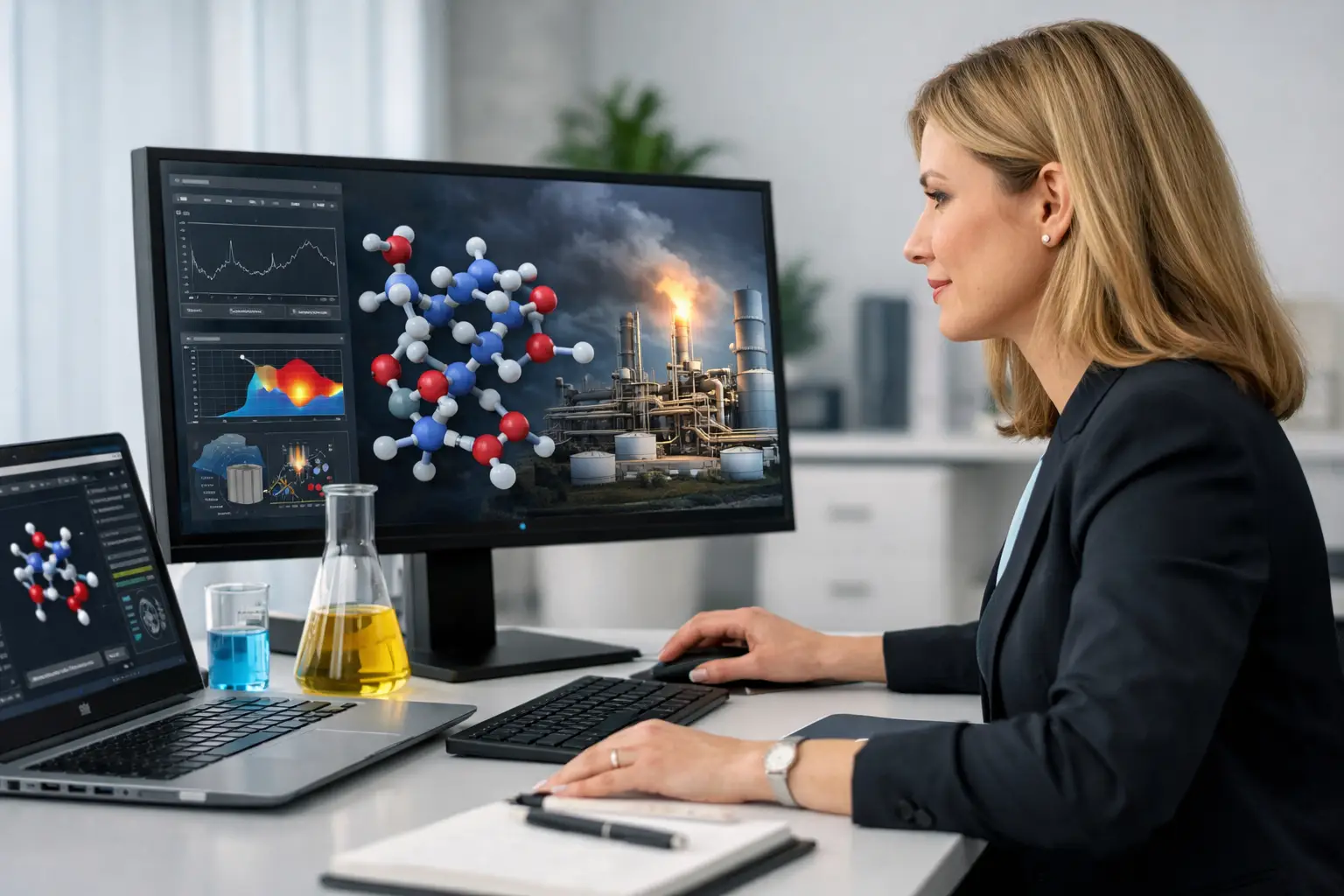
A formula is almost never delayed by one dramatic failure. More often, it stalls because teams are waiting on scattered SDS files, unclear ingredient flags, supplier follow-up, and a second round of review on a substance that looked acceptable at first glance. That is exactly where chemical hazard prediction software earns its place. It gives product teams a faster way to see likely hazards, compare alternatives, and make formulation decisions before risk compounds into cost.
For companies building personal care, household, wellness, and other ingredient-driven products, the old process is too fragmented. R&D may have one view of an ingredient. Compliance may have another. Procurement may be chasing supplier documents. Sustainability teams may be asking whether a safer or lower-impact substitute exists. When those workflows live in separate tools and spreadsheets, decision-making slows down and confidence drops.
Why chemical hazard prediction software matters now
The pressure on formulation teams has changed. It is no longer enough to make a product that performs well and clears a basic safety check. Teams are expected to move faster, justify ingredient choices, anticipate regulatory pressure, and support cleaner product claims with evidence. That means hazard review has to happen earlier and with more visibility.
Chemical hazard prediction software helps shift risk review from a late-stage checkpoint to a working part of product development. Instead of waiting for final documentation or outside testing to reveal concerns, teams can screen ingredients earlier, identify likely problem areas, and narrow the field before investing time in formulas that may need to be reworked.
That does not mean software replaces lab validation, toxicology expertise, or regulatory judgment. It means those resources can be used more strategically. If a platform can quickly surface likely carcinogenicity concerns, sensitization risk, persistence questions, or ingredient profile gaps, teams can focus expert attention where it matters most.
What good software should actually do
Not every system labeled as chemical hazard prediction software solves the real workflow problem. Some tools are little more than static databases. Others are useful for specialists but too technical for cross-functional teams who need clear, decision-ready outputs.
A strong platform should combine prediction, documentation, and comparison in one environment. It should let users assess an ingredient, understand why it is being flagged, compare candidate substitutes, and connect those findings to a formula or product portfolio. That is what turns hazard insight into action.
Prediction is only one part of the job
The phrase sounds advanced, but prediction alone is not enough. A useful system needs to help answer practical questions. Is this ingredient likely to trigger further review? Are there cleaner alternatives with similar functional value? Does this choice create downstream compliance friction? Are suppliers providing enough data to support the decision?
If software can predict a hazard but cannot help a team evaluate trade-offs, it becomes another isolated screen in an already crowded process. Product developers need context. Compliance managers need traceability. Procurement needs a way to compare suppliers and data quality. Sustainability leads need visibility into whether a substitution improves the profile of the product or simply shifts the problem.
Clarity beats complexity
The best platforms make chemical intelligence usable by more than chemists. That matters because ingredient decisions are rarely made by one person. Marketing may want to remove a controversial substance. R&D may be concerned about performance loss. Regulatory may be watching restricted lists. Leadership may want portfolio-level visibility.
A modern system should translate technical hazard signals into guided workflows. Dashboards, comparison views, scans, and reports are not cosmetic features. They are how organizations turn chemical assessment into repeatable operational decisions.
Where teams see the biggest gains
The clearest value appears before a product reaches the point of no return. Early screening helps teams avoid building around ingredients that will later create safety, compliance, or sustainability obstacles. That shortens reformulation cycles and reduces expensive backtracking.
For formulation teams, this often means faster ingredient down-selection. Instead of manually reviewing one substance at a time, they can evaluate several options side by side, screen for likely hazards, and rule out weak candidates earlier. That keeps experimentation focused.
For compliance teams, the gain is consistency. Hazard review often depends on who is doing the check, which data source they trust, and how much time they have. Software creates a more standardized process. Flags, documentation, and comparisons are easier to review and easier to revisit later.
For procurement, the benefit is visibility. Ingredient risk is not just about intrinsic hazard. It is also about missing supplier data, unclear documentation, and poor transparency across sourcing options. A connected platform can expose those weak spots earlier, which is often just as valuable as the hazard model itself.
The trade-offs teams should understand
Chemical hazard prediction software is powerful, but it is not magic. The quality of output depends on the quality of underlying data, model design, and workflow integration. A prediction should guide decisions, not act as a black box verdict.
This is where many buying teams get it wrong. They ask whether the software is accurate, as if accuracy were one universal score. In reality, it depends on the endpoint being predicted, the substance class, the completeness of source data, and the decision being made. A tool may be excellent for early screening and still require expert review for final risk determination.
There is also a practical trade-off between depth and speed. Highly specialized systems can offer rich scientific detail but overwhelm non-expert users. Simpler tools may be easier to adopt but too shallow for serious regulatory or portfolio work. The right choice depends on whether your organization needs a specialist workstation, a cross-functional operating system, or both.
How to evaluate chemical hazard prediction software
A smart evaluation starts with the workflow, not the feature list. Ask where ingredient decisions currently break down. Is the problem slow hazard screening, inconsistent compliance review, weak alternative analysis, or fragmented supplier information? The answer should shape the platform you choose.
Then look at how the software handles real tasks. Can your team compare ingredients in context, not just view them one by one? Can it support formulation decisions, not just chemical lookup? Can it connect hazard signals to reporting, portfolio analytics, or sustainability targets? If not, you may end up with a tool that informs but does not move work forward.
It is also worth checking who can actually use the system productively. If only one technical specialist can interpret the output, adoption will stay narrow and bottlenecks will remain. The strongest platforms make advanced chemical assessment accessible without flattening the science into vague red-yellow-green labels.
A platform such as Suttain reflects where the market is heading because it treats hazard prediction as part of a larger formulation and decision environment. That matters for teams that need to scan products, compare ingredients, review safety documentation, model alternatives, and report across a portfolio without stitching together five different systems.
What the future looks like
The next phase of chemical hazard prediction software is not just better models. It is better operational fit. Teams need systems that bring together hazard prediction, formula building, compliance intelligence, supplier verification, and sustainability measurement in one place.
That shift changes the role of software from reference tool to decision engine. Instead of asking, "What do we know about this ingredient?" teams can ask, "What should we do next?" That is a much more valuable question.
As regulatory scrutiny grows and ingredient expectations keep rising, companies that still rely on manual review and disconnected spreadsheets will feel the drag. The winners will be the teams that can predict issues earlier, test options faster, and document choices with confidence.
Chemical hazard prediction software is not just about finding dangerous ingredients. It is about giving product makers more control over speed, safety, and strategic direction. When the right system is in place, teams stop reacting to chemical complexity and start using it as a point of advantage.
The best software will not make tough formulation decisions disappear. It will make them faster, clearer, and far easier to defend.