
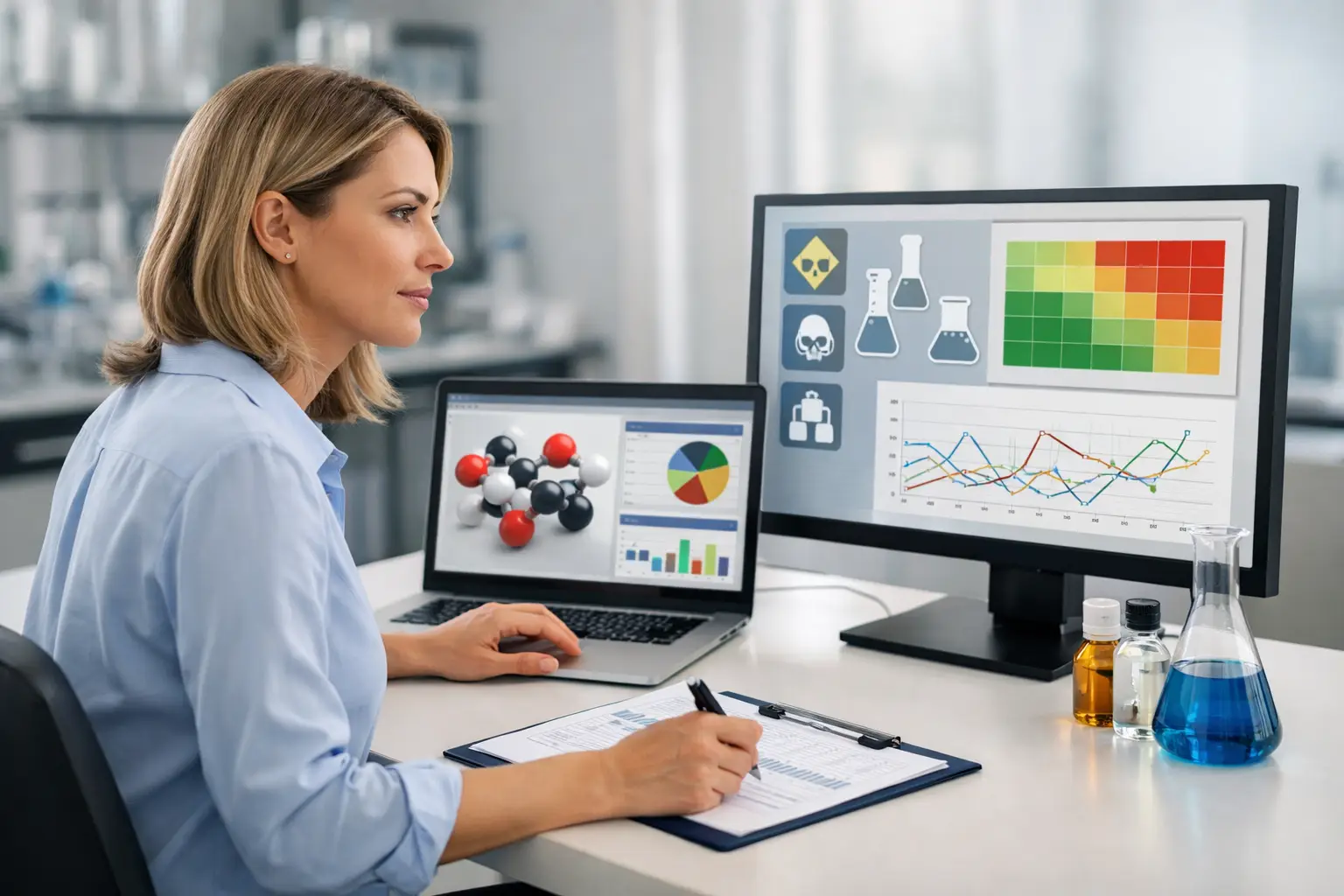
A chemical risk software comparison gets real fast when your team is staring at three different systems that all promise safer ingredients, cleaner formulas, and easier compliance. On paper, the features can look nearly identical. In practice, the gap shows up in the daily work - how quickly you can screen an ingredient, how confidently you can compare alternatives, and whether compliance review becomes a workflow or a bottleneck.
For product developers, compliance managers, procurement leads, and sustainability teams, that distinction matters more than a feature checklist. The best platform is not the one with the most modules. It is the one that helps your team make better chemical decisions with less friction.
How to approach a chemical risk software comparison
Most software evaluations start too high level. Buyers ask whether a platform supports compliance, hazard review, and reporting. Almost every serious vendor will say yes. The better question is how those tasks actually work across your product lifecycle.
If your team is building or reformulating products, chemical risk software should do more than store safety information. It should help you predict risk earlier, compare substances side by side, and understand what happens when one ingredient change affects performance, compliance status, supplier options, and sustainability claims.
That is why software in this category tends to fall into a few different camps. Some tools are document-first. They are strong at SDS storage, regulatory reference, and record management. Others are compliance-first, built to help EHS or regulatory teams track obligations and maintain audit readiness. A smaller group is decision-first, designed to support ingredient selection, formulation work, and chemical intelligence in one environment.
None of those approaches is automatically better. It depends on what problem you are trying to solve. If your biggest issue is managing safety documentation across facilities, a document-heavy system may be enough. If your challenge is choosing safer materials before they become part of the product portfolio, you need something more dynamic.
What matters most in a chemical risk software comparison
The first factor is data usability. A platform may have an enormous chemical database, but that does not mean your team can act on it quickly. Ask whether users can move from raw chemical information to practical decisions without a specialist translating every result. If the interface turns every review into a technical research project, adoption will stall.
The second factor is comparison logic. This is where many platforms look stronger in a demo than they feel in production. Teams do not just need a risk score. They need to compare ingredients across hazard characteristics, regulatory flags, supplier quality, performance fit, and sustainability impact. If comparisons happen in separate screens or external spreadsheets, the software is only solving part of the problem.
Workflow depth matters just as much. Can a formulator test an ingredient alternative, flag a concern, send it to compliance, and keep a visible record of that decision path? Can procurement review approved substitutes with supplier context attached? Can sustainability teams see whether a safer choice also improves carbon or broader environmental metrics? The more disconnected those steps are, the more likely your team is to fall back on email chains and static files.
Reporting is another useful differentiator. Some systems produce reports mainly for documentation after a decision is made. Others support live dashboards that help teams spot portfolio-level patterns before risk scales. If you manage many SKUs, suppliers, or formulation variants, that visibility becomes a strategic advantage rather than a nice add-on.
Core categories of software and where they fit
Document management platforms are often the easiest place for companies to start. They centralize SDS files, support chemical inventories, and improve traceability. For operations teams that mainly need organized records and easier retrieval, that can be enough. The trade-off is that these systems usually stop short of active formulation support or predictive ingredient screening.
Regulatory and EHS platforms are stronger when the priority is obligation management, workplace safety, labeling, and audit support. They are useful for organizations with complex reporting requirements across sites or regions. The limitation is that they may sit downstream from product development. By the time a concern is identified, the ingredient choice may already be embedded in the formula.
Formulation and chemical intelligence platforms take a different route. They are built for earlier decision-making, where teams need to explore ingredients, simulate options, compare alternatives, and see risk in context. For companies trying to reduce reformulation cycles or build cleaner products faster, this model tends to be more aligned with the real work.
The right fit often comes down to where your organization feels pain first. If you are drowning in files, start there. If you are repeatedly finding risk too late, you need software that moves upstream.
Questions buyers should ask before choosing a platform
A useful software review is less about what the vendor says and more about what your team can do in week two. Ask for a realistic workflow, not a polished overview. Start with a common task: replace a questionable ingredient, compare three alternatives, review compliance implications, and document the rationale.
Watch how many steps it takes. Notice who would need training to complete it. If the answer is still "your toxicologist will handle that," the platform may not match a modern cross-functional team.
It is also worth testing how the system handles imperfect data. Real ingredient decisions often involve missing supplier details, partial documentation, or competing priorities between cost, safety, and sustainability. A platform that only works cleanly under ideal conditions will create frustration as soon as it meets real purchasing and development constraints.
Integration should also get careful attention. Chemical risk software does not operate in isolation. It may need to connect with PLM, ERP, supplier systems, barcode inputs, internal reporting, or custom dashboards. Some companies do not need extensive integration at the start, but they often need it later. Choosing a platform that can scale into a broader digital workflow can save a painful rebuild.
Where many comparisons go wrong
The biggest mistake is overvaluing breadth and undervaluing actionability. A long list of modules can be impressive, but if users cannot move from screening to decision without extra manual work, the software becomes another reference tool rather than an operational system.
Another common mistake is separating compliance from formulation. In many organizations, those functions still work in parallel. One team builds, another team checks. That structure creates lag, rework, and preventable risk. Software should help collapse that gap by making chemical intelligence visible during ingredient selection, not after.
There is also a tendency to buy for the specialist and ignore everyone else. Technical rigor matters, but most chemical decisions touch multiple stakeholders. A platform that only serves experts may protect data quality while slowing actual adoption. The stronger model is guided complexity - serious science underneath, usable workflows on top.
That is why newer platforms are gaining attention. Instead of treating chemical assessment as a standalone compliance task, they connect risk prediction, ingredient comparison, formulation development, and reporting into one decision environment. Suttain is part of that shift, reflecting how product teams now want to work: faster, clearer, and with fewer handoffs.
What a strong platform should feel like in practice
Good chemical risk software should shorten the path between question and action. If a team member scans a product, reviews an ingredient, or evaluates a substitute, they should be able to understand what matters and what to do next without opening five other systems.
That does not mean oversimplifying chemistry. It means presenting risk in a way that supports real business decisions. A product developer may need to know whether an ingredient introduces a reformulation issue. A compliance lead may need to know whether it triggers a restricted status in a target market. A sustainability lead may want to see whether there is a lower-impact option. One platform will not erase those differences, but it should help them work from shared visibility.
This is where software earns its place. Not by storing more data, but by helping teams compare, predict, and decide before problems become expensive.
Making the final call
A useful chemical risk software comparison should leave you with more than a ranking. It should clarify what kind of system your organization actually needs right now, and what kind of operating model you want to build over time.
If your goal is tighter documentation, choose the platform that handles documentation well. If your goal is better chemical decisions earlier in development, look for software that supports comparison, simulation, and cross-functional action from the start.
The best choice is rarely the flashiest one. It is the one your team will actually use when an ingredient raises a question, a formula needs to change, or a product launch depends on getting risk right the first time. That is when software stops being a database and starts becoming a decision engine.